Introduction
When you face a pile of heavy boxes or a massive refrigerator that needs moving, the right equipment is the difference between a quick job and a back injury. Most people use the terms interchangeably, but a Hand Truck and a moving dolly are fundamentally different tools. Each has a specific mechanical advantage designed for different types of loads. Choosing the wrong one makes the task harder and increases the risk of damaging your property.
In this comprehensive guide, we break down the engineering and practical applications of both. We will explore why a Professional Hand Truck is the king of vertical transport, while the moving dolly reigns supreme for oversized, horizontal loads. Whether you are a warehouse manager looking for Industrial solutions or a homeowner needing something Portable, understanding these differences will save you time and physical strain.
Anatomy of the Hand Truck: The L-Shaped Lever
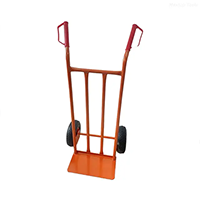
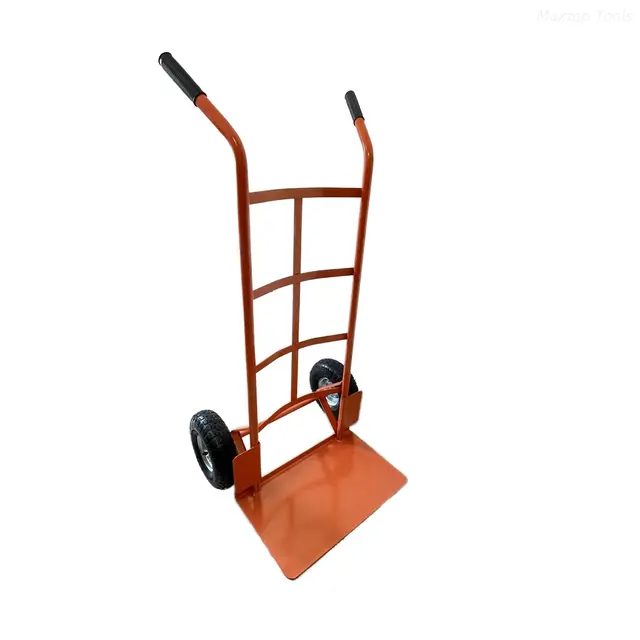
The Hand Truck is a two-wheeled vertical tool, often called a "dolly" by mistake, but its L-shaped design is its defining feature. It relies on the principle of the lever to turn a heavy weight into a manageable load. You slide the flat base plate under the object, tilt the handle back, and the wheels act as a fulcrum.
Vertical Support and Stability
Because it stands upright, the Hand Truck is perfect for stacking multiple boxes. It keeps the center of gravity over the wheels. A Heavy duty model typically features a tall backframe that supports the load from behind. This prevents items from toppling backward toward the operator. It is the go-to choice for delivery drivers who need to move tall stacks of crates quickly through narrow doorways.
Wheel Technology for Different Terrains
An Industrial Hand Truck often comes equipped with a Flat-free tire. Unlike air-filled tires, a Flat-free tire is made of solid polyurethane or foam-filled rubber. It won't go flat when you roll over a stray nail in a warehouse or a sharp rock on a construction site. This ensures the tool is always ready for work. For indoor use on smooth floors, a more Compact version might use smaller, solid rubber wheels to save space and weight.
Defining the Moving Dolly: The Low-Profile Platform
Unlike the upright Hand Truck, a moving dolly is a simple, four-wheeled platform. It has no handles and no vertical back. It sits low to the ground, which makes it remarkably stable for items that are too wide or too heavy to be tilted back on two wheels.
Four-Way Mobility
The primary advantage of the dolly is its maneuverability. Most dollies use swivel casters on all four corners. This allows you to push a heavy piano or a large dresser in any direction—even sideways through a tight hallway. While a Hand Truck is limited to forward and backward motion, the dolly offers 360-degree freedom.
Loading and Center of Gravity
Because the dolly has no lever mechanism, you must lift the item onto the platform. This is a significant difference. You don't "tilt" a load onto a dolly; you set it down on top. This keeps the center of gravity extremely low. It is the safest way to move "top-heavy" items like wardrobes or large safes that might become dangerous if tilted back on a two-wheeled Professional Hand Truck.
Key Differences in Load Handling and Maneuverability
Understanding how these tools move is essential for safety. The mechanical physics involved in a Hand Truck vs. a moving dolly determines which one you should grab for a specific task.
Leverage vs. Pure Rolling
The Hand Truck uses leverage. When you pull back on the Ergonomic handles, you are using the tool to do the heavy lifting for you. In contrast, the dolly is purely for rolling. Once the item is on the dolly, your only job is to provide the horizontal force to move it.
Stair Climbing Capabilities
This is the biggest "deal-breaker" for many movers. A Portable Hand Truck can go up and down stairs. You can pull the large wheels over the edge of a step. Some Industrial models even feature specialized stair-climber tracks or a three-wheel "star" configuration. A moving dolly is completely useless on stairs. Its small casters will get stuck on the first step, and without a handle, you have no way to control the descent.
When to Reach for a Professional Hand Truck
There are specific scenarios where the Hand Truck is the only logical choice. Experts in logistics prioritize this tool for its speed and vertical efficiency.
Multi-Box Stacking
If you are moving 20 small boxes, you don't want to load them one by one onto a flat dolly. A Professional Hand Truck allows you to stack five or six boxes vertically. You tilt the whole stack back and move it in one trip. It is the most efficient way to handle high-volume, uniform cargo.
Appliance Moving
For refrigerators, washers, and dryers, a Heavy duty Hand Truck with built-in straps is the industry standard. These items are tall and narrow. Strapping them to the vertical frame of the Hand Truck ensures they stay upright and secure. The Ergonomic design of the handles allows the mover to keep their back straight while balancing the weight over the axle.
Critical Insights for Hand Truck Selection
Choosing the Right Frame Material
A High-quality Hand Truck is usually made of either steel or aluminum. Steel is incredibly Durable and cheaper, making it the choice for rugged Industrial use. Aluminum is Portable and lightweight, which is ideal for delivery drivers who must lift the truck in and out of a van all day.
The Importance of Nose Plate Size
The "nose" or "toe" plate is the part that slides under the load. If you frequently move oversized boxes, look for an Industrial model with a folding nose extension. This provides a larger surface area, preventing the bottom box from sliding off during transit. A Compact model might have a shorter plate to stay out of the way in tight closets.
When the Moving Dolly is the Superior Choice
While the Hand Truck is versatile, it has limits. The moving dolly takes over when the dimensions of the load become too extreme for a two-wheeled lever.
Oversized and Oddly Shaped Items
Imagine moving a king-sized mattress or a long conference table. Trying to balance these on a Hand Truck is a recipe for disaster. The moving dolly provides a stable base that supports the entire length or width of the object. Since it has four points of contact with the ground, there is no "balancing" required by the operator.
Long Distance Indoor Transport
If you need to move a heavy desk across a long warehouse floor, holding the handles of a tilted Hand Truck for 500 feet is exhausting. Your arms and shoulders bear the tension of keeping the load balanced. With a dolly, you simply push. The floor supports 100% of the weight, and you only provide the momentum. This makes the dolly the more Ergonomic choice for long, flat hauls.
Ergonomics and Safety: Protecting the Operator
Safety is the primary concern for any procurement officer or homeowner. Using the wrong tool leads to musculoskeletal injuries and property damage.
Hand Truck Ergonomics
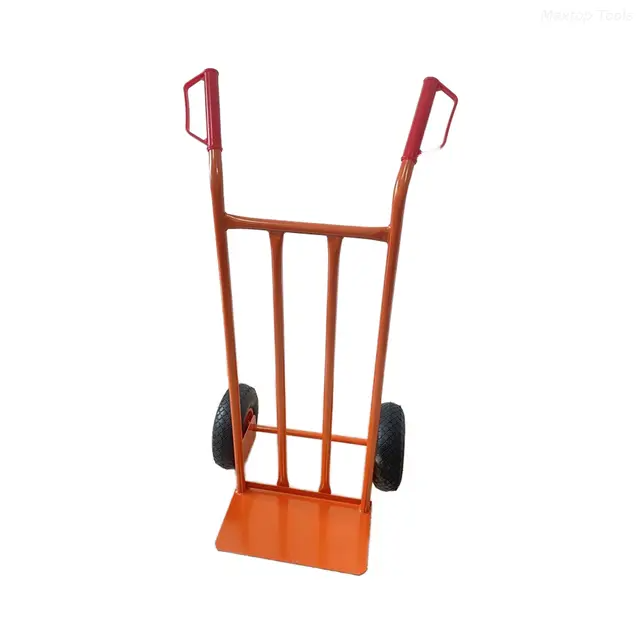
A Professional Hand Truck should have Ergonomic handles that allow for multiple grip positions. High-loop handles are great for tall people, while dual-grip handles provide better control in tight turns. Always remember to "let the tool do the work." If you find yourself straining to pull the Hand Truck back, the load is likely too heavy or stacked too far forward.
Dolly Safety Protocols
The biggest risk with a dolly is the load sliding off. Because there are no handles to hold the item in place, friction is your only friend. Many Professional dollies feature carpeted or rubber-capped ends to grip the furniture. Unlike the Hand Truck, which you "pull," a dolly should always be "pushed" to keep the operator's path clear and maintain better control over the momentum.
| Feature | Hand Truck | Moving Dolly |
| Wheels | 2 Large Wheels | 4 Small Casters |
| Orientation | Vertical / Upright | Horizontal / Flat |
| Primary Physics | Leverage (Lever) | Rolling (Platform) |
| Best For | Stacks of boxes, Appliances | Furniture, Bulky items |
| Stairs | Yes (with Flat-free tire) | No |
| Maneuverability | Forward/Backward | 360-Degree Swivel |
Hybrid Solutions: The Best of Both Worlds
In 2026, many Industrial users are opting for 2-in-1 or 3-in-1 convertible units. These tools solve the "which one do I need?" dilemma by transforming based on the task at hand.
The Convertible Advantage
A convertible Heavy duty Hand Truck can function as a standard upright tool. With a quick release of a pin, the handle folds down, and a second set of smaller wheels touches the ground. Suddenly, it is a four-wheeled platform truck. This is the ultimate Portable solution for people who encounter different types of loads throughout the day.
Why Every Warehouse Needs a Hybrid
Investing in a Professional convertible unit reduces the amount of equipment you need to store. It provides the leverage of a Hand Truck for boxes and the flat stability of a dolly for long items. While these units are more expensive upfront, their versatility makes them the most cost-effective Industrial choice in the long run.
Maintenance Tips for Longevity
Buying a High-quality tool is an investment. Proper maintenance ensures that your Hand Truck or dolly remains a reliable partner for years.
Check the Fasteners: Vibrations from rolling over rough surfaces can loosen bolts. Tighten them once a month to prevent the frame from wobbling.
Lubricate the Axles: A drop of oil on the wheel bearings keeps the motion smooth. This is especially important for the swivel casters on a dolly.
Inspect the Flat-free tire: Even though they don't leak air, a Flat-free tire can develop flat spots if left under a heavy load for weeks. Always store your Hand Truck without a load on it.
Clean the Nose Plate: Dirt and oils on the plate can make it slippery. Keep it clean to ensure a solid grip on the bottom of your boxes.
Conclusion
The choice between a Hand Truck and a moving dolly depends entirely on what you are moving and where you are going. If you have stacks of boxes or need to navigate stairs, the Professional Hand Truck is your best friend. Its L-shaped design and Ergonomic leverage make vertical moving effortless. However, if you are tackling a wide piece of furniture on a flat surface, the moving dolly is the safer, more stable option.
For most people, having a Heavy duty Hand Truck is the priority because of its versatility and stair-climbing ability. However, understanding the specific "Expert Insight" of when to switch to a dolly will prevent accidents and make your next move significantly smoother.
FAQ
Q1: Can I use a Hand Truck to move a sofa?
A: It is not recommended. Sofas are too long and will be unstable on a two-wheeled Hand Truck. A moving dolly (or two) placed at either end is much safer.
Q2: Are Flat-free tires better than pneumatic tires?
A: For most Industrial uses, yes. A Flat-free tire eliminates maintenance and downtime. However, pneumatic (air-filled) tires provide a "cushion" that is better for moving fragile items over very bumpy outdoor terrain.
Q3: How much weight can a standard Heavy duty Hand Truck hold?
A: Most Professional models are rated for between 500 and 800 lbs. Always check the manufacturer’s label before attempting a heavy lift.
Our Factory Strength and Commitment
At our manufacturing facility, we focus on the intersection of durability and innovation. We don't just "make" tools; we engineer solutions for the real world. Our factory is equipped with high-precision robotic welding and advanced stress-testing labs. This ensures that every Hand Truck leaving our floor is truly Heavy duty and capable of withstanding the rigors of Industrial environments.
Our strength lies in our control over the entire production cycle. From sourcing high-grade aluminum and steel to the final inspection of our Ergonomic handles, we prioritize quality at every step. We understand the B2B market's need for reliability. That is why we specialize in features like the Flat-free tire and Portable folding designs that help your team work faster and safer. When you choose our equipment, you are partnering with a factory that stands behind its products with years of expertise and a passion for engineering excellence.
 注: 建议图片大小150px*50px


