

Views: 0 Author: Site Editor Publish Time: 2026-04-24 Origin: Site


A mulch order, a topsoil delivery, or a pile of gravel by the driveway often leads to the same question: how much can a wheelbarrow actually carry, and how many trips will the job take? This is where the question how many yards in a wheelbarrow becomes useful. At Maxtop, this is not just a math topic. It is directly connected to how buyers plan daily work, choose the right tray size, and decide whether they need a lighter garden model or a stronger unit for repeated heavy loads.
When people ask how many yards in a wheelbarrow, the word yard means cubic yard. It is a measure of volume, not ground area. One cubic yard equals 27 cubic feet. That is the key number behind all the common wheelbarrow capacity estimates.
This matters because wheelbarrows are usually described by cubic feet, while bulk materials such as mulch, soil, and gravel are often sold by the cubic yard. If a customer orders one cubic yard of mulch, the next practical question is how many wheelbarrow loads it will take to move it from the delivery point to the final work area. Once the conversion is clear, the rest becomes much easier to estimate.
Most users do not want to read a long explanation before seeing the answer. They want a working estimate right away. The simplest way to calculate it is to divide 27 cubic feet by the wheelbarrow capacity.
Wheelbarrow capacity |
Loads for 1 cubic yard |
Yards per full load |
2 cubic feet |
about 13.5 to 14 loads |
about 0.074 yard |
3 cubic feet |
9 loads |
about 0.111 yard |
6 cubic feet |
about 4.5 loads |
about 0.222 yard |
This table gives a clear starting point. A 2 cubic foot wheelbarrow needs roughly 14 loads for one cubic yard. A 3 cubic foot wheelbarrow needs about 9 loads. A 6 cubic foot model cuts that down to about 4 or 5 full loads. That is the quick answer, but real work is rarely as exact as the table.
The rated capacity of a wheelbarrow is only part of the story. In actual use, many people do not fill every load to the rim. Sometimes the material is too heavy, sometimes the path is uneven, and sometimes the user wants better control while pushing. As a result, the real number of trips is often slightly higher than the pure volume calculation suggests.
This is especially true on jobs that involve careful movement through gates, narrow paths, or soft ground. Even if a tray is large enough on paper, the practical working load may be smaller. That is why good planning should use the volume table as a guide, not as an unchanging rule.
Not all materials feel the same in a wheelbarrow. One full load of mulch is very different from one full load of wet soil or gravel. The tray may hold the same volume, but the effort needed to push that volume changes a lot.
Mulch and compost are relatively light, so users can usually fill the tray closer to its rated capacity. Wet soil is heavier and may be loaded more carefully. Gravel and concrete create even more strain, so many users naturally reduce the load size for better control and safety. This is why the answer to how many yards in a wheelbarrow is not only about space inside the tray. It is also about how heavy the material feels in motion.
The route also affects the real result. A smooth driveway allows fuller loads and easier pushing. A muddy path, loose gravel surface, or sloped garden area changes the experience immediately. On difficult ground, users often carry less in each trip to keep the wheelbarrow steady.
That is why job planning should always consider the path between the material pile and the work zone. The same wheelbarrow can feel very different on concrete compared with grass or soft soil. This is also where wheel setup becomes more important, because the right wheel helps maintain better control when surfaces are uneven.
Dirt and topsoil are among the most common materials people move by wheelbarrow, especially in landscaping, lawn repair, and garden bed preparation. These materials are manageable, but they become heavy quickly when damp. For this reason, many users with a mid-size wheelbarrow do not fill every load completely to the top.
A 3 cubic foot wheelbarrow may calculate to 9 loads per cubic yard, but with topsoil the practical result may be closer to 10 or even 11 trips depending on moisture, route, and user comfort. This is an important point for buyers who are planning labor and time, not just volume. A smaller tray can still do the job, but the number of trips rises quickly once the material becomes dense.
Mulch and compost are much friendlier materials for wheelbarrow work. They are lighter, easier to tip, and more forgiving on garden paths. Because of that, users often get closer to the rated tray capacity. A 3 cubic foot wheelbarrow can often handle mulch much more efficiently than it handles wet soil.
This is one reason lighter wheelbarrow styles are popular in gardening. When the material is not extremely dense, easy handling can matter more than maximum strength. For home gardens and routine landscape jobs, a plastic tray wheelbarrow can be a practical choice because it is comfortable to push, simple to clean, and well suited to repeated light-to-medium loads.
Gravel and concrete should be approached more carefully. These materials are dense, and a tray that looks large enough may become difficult to manage when fully loaded. On paper, the volume formula is still correct, but in practice many users load less than the rated capacity to keep the wheelbarrow stable and easier to tip.
This is where a stronger tray, durable frame, and reliable wheelbarrow wheel setup become more important. For repeated heavy transport, users usually benefit from a heavy-duty model rather than trying to push a lighter product beyond its comfortable working range. It is better to make a few extra trips than to struggle with unstable or overly heavy loads every time.
For small garden jobs, a very large tray is not always the best answer. If the work involves mulch, compost, leaves, or light soil, many users prefer a model that feels easier to turn and less tiring over repeated short trips. Comfort matters, especially for home users or landscapers handling mixed tasks throughout the day.
This is where lighter wheelbarrow designs fit well. A practical tray size paired with smooth handling often improves real working efficiency more than simply choosing the biggest body available. For this kind of use, Maxtop’s lighter options support daily garden work without adding unnecessary bulk.
For bigger transport jobs, capacity becomes more valuable. Construction sites, farm work, renovation cleanup, and dense landscaping material often require a stronger structure and a larger tray. Fewer trips save time, but only when the product remains stable and durable under load.
That is why larger steel models are often the better choice for repeated heavy-duty work. They are designed for tougher material and more demanding routes. Maxtop’s heavy-duty range supports this type of task by combining stronger tray construction with dependable handling for everyday use in real working conditions.
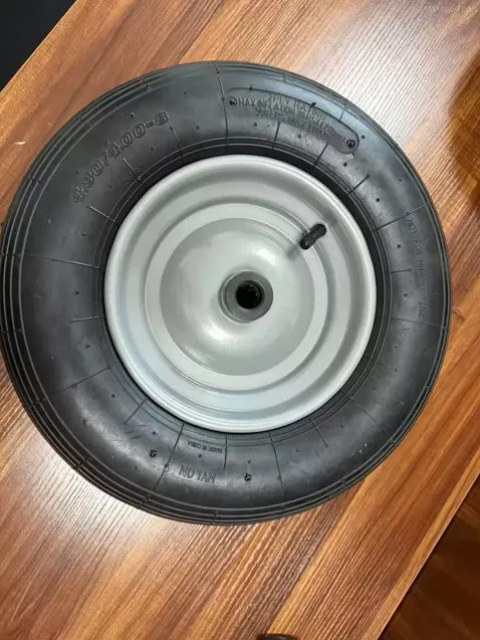
Even in a capacity-focused article, the wheel should not be ignored. A good wheelbarrow wheel setup affects balance, rolling resistance, and the user’s confidence under load. That matters more when the tray is full of dense material or the surface is rough.
A stable rolling system helps users carry practical loads with better control, which means the wheel setup has a direct effect on real productivity. Maxtop offers not only complete wheelbarrows but also replacement wheel solutions, giving buyers more flexibility when matching the product to local market needs.
The answer to how many yards in a wheelbarrow starts with simple math: one cubic yard is 27 cubic feet, so the number of loads depends on the wheelbarrow capacity. But practical job planning goes further than that. Material weight, true fill level, surface conditions, and wheel performance all affect the real number of trips. That is why the best solution is not only to calculate volume, but also to use the right product for the task. Maxtop provides options for light garden work, heavier transport, and steady daily handling, helping buyers connect capacity planning with reliable product selection. If you are looking for the right wheelbarrow trolley or need support for your market, contact us today.
It depends on wheelbarrow capacity. A 2 cubic foot model needs about 14 loads, a 3 cubic foot model needs about 9 loads, and a 6 cubic foot model needs about 4 to 5 loads.
Yes. A 3 cubic foot wheelbarrow is a common and practical size for garden soil, mulch, compost, and general yard cleanup. It offers a useful balance between load size and handling comfort.
Gravel is much denser than mulch. Even when the tray holds the same volume, the total weight is much higher, so users often reduce the load size for better control and safety.
Yes. Capacity shows how much the tray can hold, but wheel setup affects how that load behaves in real use. A better wheel system improves balance, rolling smoothness, and control on uneven surfaces.


 注: 建议图片大小150px*50px


