Introduction
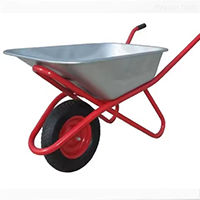
Planning a landscaping project often starts with a simple yet frustrating question: How many wheelbarrow loads are in a cubic yard? If you are ordering mulch, soil, or gravel, the delivery truck usually drops a massive pile in your driveway. Moving it to your backyard requires a wheelbarrow, but not all carts are created equal. Knowing the exact math prevents over-exhaustion and helps you manage your time effectively.
A "yard" in landscaping terms refers to a cubic yard—a volume measurement of 27 cubic feet. Depending on whether you use a light plastic tray model for gardening or a heavy duty steel version for construction, the number of trips you take will vary significantly. This guide provides the expert formulas and practical insights needed to calculate your workload with precision, ensuring your next outdoor project runs like a well-oiled machine.
Understanding the Cubic Yard vs. Wheelbarrow Volume
Before you grab your shovel, you must understand the "Golden Rule" of landscaping math: 1 Cubic Yard = 27 Cubic Feet. Most homeowners assume their wheelbarrow is a standard size, but volume varies by design and intent. A two wheel residential cart designed for leaves has a different capacity than a deep-tray heavy duty steel unit meant for wet concrete.
To visualize a cubic yard, imagine a box that is 3 feet wide, 3 feet long, and 3 feet deep. Most standard residential units hold between 2 to 3 cubic feet when filled to the brim. If you are using a light plastic tray cart, it likely sits on the smaller end of that scale. This means you aren't just looking at one or two trips; you are looking at a repetitive physical task. Understanding these volume increments is the first step in avoiding project burnout.
Calculating Loads Based on Wheelbarrow Capacity
The "average" number often cited is 9 to 14 loads per yard. However, we want to be more precise. The capacity of your wheelbarrow is usually printed on the box it came in or embossed on the tray itself. If you lost the manual, don't worry. You can calculate it yourself by measuring the length, width, and depth of the tray.
Small (2-3 cu. ft.): Often found in light plastic tray varieties. These are great for flowers but require roughly 9 to 14 loads per yard.
Medium (4-5 cu. ft.): The standard for a two wheel residential model. These require about 6 to 7 loads per yard.
Large/Contractor (6-8 cu. ft.): These are typically heavy duty steel units. They cut your work down to 4 or 5 loads per yard.
Using a high weight capacity cart significantly reduces the number of trips, but it increases the physical strain per trip. If you are moving heavy wet soil, a 6-cubic foot load can weigh over 200 pounds. Always balance volume with your own physical strength.
How Material Weight Affects Your Choice of Wheelbarrow
Volume is only half the battle; weight is the other. A yard of dry mulch is light and easy to move in a dual wheel garden cart. A yard of wet gravel or topsoil is a different beast entirely. If your cart has a light plastic tray, it might crack under the pressure of heavy rocks or wet clay.
Heavy Duty Steel vs. Plastic Trays
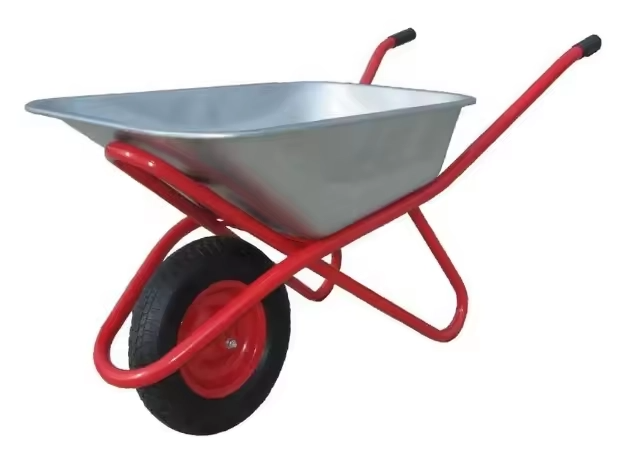
For heavy materials like stones or concrete, a heavy duty steel wheelbarrow is non-negotiable. Steel won't flex or warp under a high weight capacity load. Conversely, if you are simply moving pine needles or light compost, a light plastic tray is easier to maneuver and won't rust if left out in the rain.
The Role of Tires in Weight Management
If you are moving a full yard of gravel, a flat free tire is a lifesaver. Traditional pneumatic tires can go flat under extreme pressure or if you roll over a stray nail. A flat free tire ensures that once you start moving those 10+ loads, you won't be sidelined by a maintenance issue halfway through the pile.
Stability and Maneuverability: Single Wheel vs. Dual Wheel
When moving 10 loads of dirt to make up a yard, the terrain matters. A dual wheel garden cart offers incredible stability. It won't tip over when you are traversing a side-hill or moving over uneven grass. This is the preferred choice for two wheel residential use where the operator might not have the upper body strength to balance a heavy load on a single pivot point.
The Single Wheel Advantage
However, a single-wheel heavy duty steel wheelbarrow is the "Expert's Choice" for tight spaces. If you need to navigate narrow garden paths or dump a load into a specific hole, the single wheel allows for "zero-turn" maneuvers. It requires more core strength to keep upright, but it is much faster for a seasoned pro.
High Weight Capacity Considerations
When you have a high weight capacity load, the center of gravity shifts. Dual wheel garden models distribute this weight better, preventing the handles from "twisting" out of your hands. If you are a DIYer tackling a full yard of soil, we recommend the dual-wheel configuration to save your wrists and back from unnecessary strain.
The Math Deep Dive: Exact Load Counts
How Many Loads for Specific Sizes?
Let's get down to the exact numbers. We use the formula:27 / Wheelbarrow Capacity = Total Loads
3 Cubic Foot Cart: 27 / 3 = 9 loads. However, most people don't fill to the absolute brim to avoid spilling. Realistically, count on 10 to 12 loads.
6 Cubic Foot Cart: 27 / 6 = 4.5 loads. Professionals usually fill these higher, so 5 loads is a safe bet for a cubic yard.
Factors That Change the Count
Not every shovelful is the same. If the material is "fluffy" (like straw), it takes up more space but weighs less. If you are packing it down, you might actually fit more than 3 cubic feet into a 3-cubic foot wheelbarrow. Wetness also plays a role; wet sand takes up less volume than dry sand but weighs significantly more, potentially exceeding the high weight capacity rating of your equipment.
Ergonomics: How to Move a Yard Without Injury
Moving a yard of material means lifting and pushing hundreds of pounds repeatedly. Even with a flat free tire, the physical toll is high. To stay safe, always lift with your legs, not your back. When using a two wheel residential cart, keep your arms straight and use your momentum to keep the cart moving.
Handle Length and Leverage
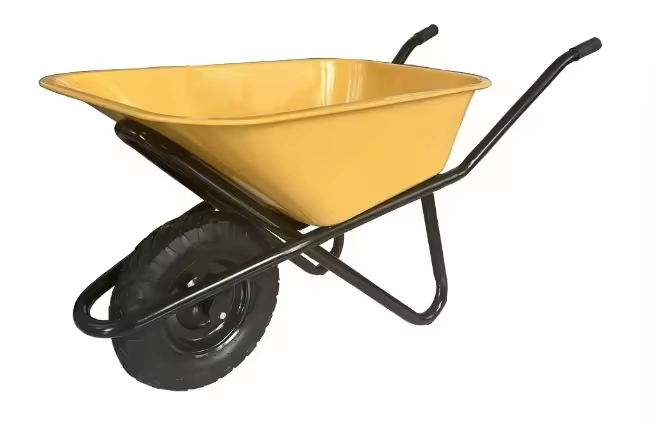
Longer handles on a heavy duty steel wheelbarrow provide better leverage. This makes the load feel lighter. If you are tall, look for a model with extended handles so you aren't hunched over while pushing. A light plastic tray model often has shorter handles, which is fine for light garden work but miserable for moving a full yard of dirt.
Speed vs. Safety
It is tempting to overfill the wheelbarrow to reduce the number of trips. Don't. Overfilling leads to spills, which means you have to clean up the path later. It also makes the cart prone to tipping. It is better to do 12 comfortable loads with a dual wheel garden cart than 8 dangerously heavy ones that leave you sore for a week.
Selecting the Right Tools for B2B and Large Scale Projects
For contractors or large estates, a standard two wheel residential cart won't cut it. You need equipment designed for daily abuse. This is where heavy duty steel construction and high weight capacity ratings become essential. In a business setting, time is money; if a light plastic tray snaps on day one, the project loses profitability.
Look for carts with reinforced undercarriages and powder-coated steel. These features prevent the frame from buckling under the weight of a full cubic yard. Furthermore, in professional settings, having a flat free tire on every unit is standard practice to prevent downtime. When you are calculating "how many fit in a yard," the pro answer is often "as few as possible, as safely as possible."
Conclusion
Calculating how many wheelbarrow loads fit in a yard isn't just a math problem—it is a logistical strategy. Whether you choose a light plastic tray for easy lifting or a heavy duty steel beast for maximum volume, knowing your capacity is key. For most projects, expect between 5 and 12 trips per yard. By matching your material weight to the right high weight capacity cart and ensuring you have a flat free tire, you can turn a grueling weekend of labor into a manageable, efficient task.
FAQ
Q: Can a standard garden wheelbarrow hold a full yard?
A: No. A cubic yard is 27 cubic feet. A standard two wheel residential cart holds about 3 to 5 cubic feet. You will need multiple trips.
Q: Is steel or plastic better for moving rocks?
A: Heavy duty steel is much better. Rocks can easily crack or puncture a light plastic tray.
Q: How do I know if my tire is "Flat Free"?
A: A flat free tire is made of solid polyurethane foam. It feels hard to the touch and doesn't have an air valve (Schrader valve) like a bicycle tire.
High-Quality Manufacturing for Your Project Needs
As a leading professional manufacturer in the hardware and tool industry, we take pride in our extensive factory strength and technical expertise. We operate a massive production facility equipped with advanced stamping and welding lines, specifically designed to produce heavy duty steel tools that stand the test of time. Our focus is squarely on the B2B sector, providing global distributors and contractors with reliable, high weight capacity equipment that outperforms retail-grade alternatives.
We understand that in the professional world, durability is everything. That is why we integrate features like flat free tire technology and reinforced frames into our dual wheel garden and residential models. Our factory's R&D team is constantly innovating to ensure our products meet strict international standards while remaining cost-effective for bulk orders. If you are looking for a trustworthy partner to supply your business with top-tier wheelbarrow solutions, we have the manufacturing power and the industry experience to exceed your expectations.
 注: 建议图片大小150px*50px


