Introduction
Selecting the right tyre for your wheelbarrow sounds simple until you see the string of numbers printed on the rubber sidewall. Whether you own a heavy duty steel wheelbarrow for construction or a light plastic tray wheelbarrow for weekend weeding, the tyre is the only part of the tool that touches the ground. It bears the brunt of the weight and dictates how easily you can maneuver across mud, gravel, or grass.
Incorrect sizing leads to more than just a bumpy ride. It can cause axle friction, reduced high weight capacity, and premature wear on your equipment. This expert guide demystifies wheelbarrow tyre sizes, explaining how to read common numbering systems and choose the best replacement for your specific needs. We will help you understand if a flat free tire is better for your terrain and how to ensure your two wheel residential wheelbarrow remains stable under load.
Decoding the Sidewall: Understanding Tyre Numbering Systems
When you look at a wheelbarrow tyre, you usually see two or three numbers separated by an "x" or a dash. These aren't random. They represent the physical dimensions required for a perfect fit. Most residential and commercial tyres follow one of two primary formats.
The first common format is the Two-Number System (e.g., 4.80/4.00-8). Here, the first number usually refers to the approximate width of the tyre, while the last number represents the diameter of the rim (the metal or plastic hole in the middle). The second format is the Three-Number System (e.g., 16 x 4.80 - 8). In this case, the first number is the total height of the inflated tyre.
Knowing these numbers is vital because a dual wheel garden wheelbarrow requires perfectly matched tyres to stay level. If one is slightly taller, the tray will tilt, making your work twice as hard. Always check both sides of the tyre, as some manufacturers print the metric equivalent alongside the imperial measurements to help international buyers find a compatible match.
Common Wheelbarrow Tyre Sizes and Their Applications
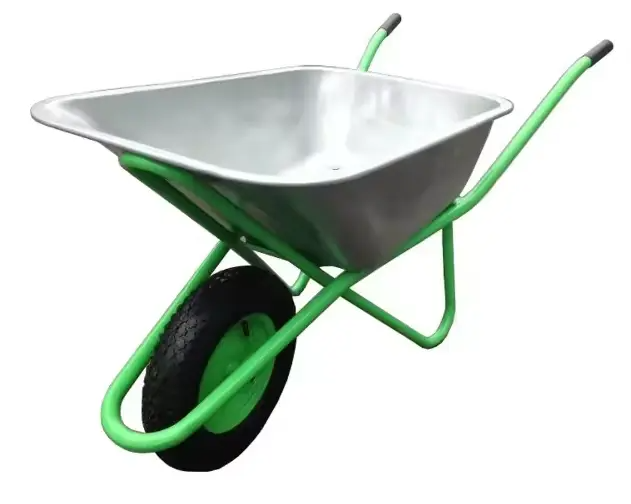
Not all tyres fit all frames. A heavy duty steel wheelbarrow designed for masonry work often uses a thicker, wider tyre than a light plastic tray wheelbarrow meant for hauling leaves. The size directly impacts the "footprint" of the tool.
The Standard 16-Inch Tyre
The 16-inch (often marked as 4.80/4.00-8) is the industry standard. It provides a balanced height that makes it easy to tip the tray forward for dumping. You will find this size on most two wheel residential wheelbarrow models because it offers great stability on flat lawns.
Small vs. Large Diameter
Smaller tyres (13 or 14 inches) lower the center of gravity. This makes a high weight capacity load feel more stable, but they struggle over large rocks or thick mud. Larger tyres (18 inches) roll over obstacles with ease but require more strength to balance.
| Tyre Size | Common Use Case | Recommended Load |
| 13 x 4.00-6 | Two wheel residential wheelbarrow | Light (up to 200 lbs) |
| 14.5 x 4.00-8 | Dual wheel garden wheelbarrow | Medium (300-400 lbs) |
| 16 x 4.80-8 | Heavy duty steel wheelbarrow | Heavy (500+ lbs) |
The Impact of Rim Diameter and Hub Width
Size isn't just about the rubber; it's about the hole in the middle. The rim diameter must match your wheelbarrow axle assembly exactly. If you buy an 8-inch tyre for a 6-inch rim, it simply won't seat properly, leading to dangerous slips.
Measuring the Hub
The hub is the central part of the wheel that the axle slides through. Even if the tyre size is correct, the hub width might be too narrow or too wide for your wheelbarrow forks. If it is too narrow, you can often use spacers or washers. However, if it is too wide, it won't fit between the metal arms.
Bearing Sizes
Most residential axles are 5/8-inch or 3/4-inch in diameter. When replacing a tyre on a dual wheel garden wheelbarrow, ensure the bearings inside the hub match your axle. A loose fit causes the wheel to wobble, which can eventually bend a heavy duty steel axle under pressure.
Pneumatic vs. Flat Free Tire: Which Size Logic Applies?
When you choose a replacement, you must decide between air-filled (pneumatic) and solid (flat-free) options. While the sizing numbers remain the same, the performance differs significantly based on the wheelbarrow type.
The Benefits of a Flat Free Tire
A flat free tire is made of solid polyurethane foam. It never needs air and cannot be punctured by nails or thorns. This is the "gold standard" for a heavy duty steel wheelbarrow used on construction sites. Since they don't compress like air tyres, they maintain a consistent height, which is excellent for a high weight capacity load.
Why Some Prefer Pneumatic
Air-filled tyres provide "cushioning." If you are using a light plastic tray wheelbarrow on a delicate lawn, the air-filled tyre absorbs shocks and won't leave deep ruts. However, they require constant maintenance. If the pressure drops, the effective size of the tyre changes, making the wheelbarrow harder to push.
How to Measure Your Wheelbarrow Tyre Like a Pro
If the numbers on your old tyre have rubbed off, don't worry. You can find the correct size using a simple tape measure. We recommend measuring the tyre while it is inflated, if possible.
Step-by-Step Measurement
Outside Diameter: Measure from the very top of the tyre to the very bottom. This is your first number in a three-number system.
Tyre Width: Measure across the tread from one sidewall to the other.
Rim Diameter: Measure the diameter of the metal wheel itself, not including the rubber.
Hub Length: Measure through the center hole from one side of the metal hub to the other.
For a two wheel residential wheelbarrow, repeat this for both wheels. Even small discrepancies between the left and right sides can cause "tracking" issues where the wheelbarrow constantly pulls to one side. This is especially frustrating when hauling a high weight capacity load of wet soil or gravel.
Sizing for Stability: Single vs. Dual Wheel Configurations
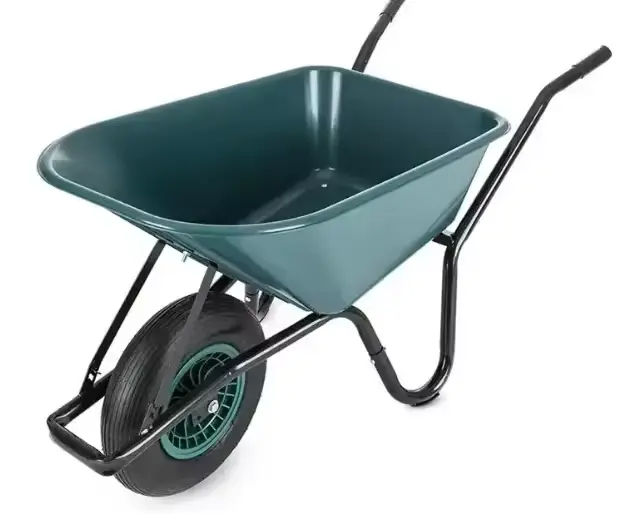
The number of wheels on your wheelbarrow changes how you should perceive tyre size and pressure. Each configuration serves a different purpose in the garden or on the job site.
Dual Wheel Garden Wheelbarrow Sizing
A dual wheel garden wheelbarrow uses two tyres side-by-side. This design provides incredible lateral stability. Because the weight is distributed across two tyres, you can often get away with slightly narrower tyres while still maintaining a high weight capacity. The key here is symmetry; both tyres must be the identical size and type.
Single Wheel Maneuverability
The classic single-wheel heavy duty steel wheelbarrow is the king of maneuverability. It can navigate narrow planks and tight corners. For these models, a wider tyre (like a 4.80 or 5.00 width) is usually better. The extra width prevents the wheelbarrow from sinking into soft dirt when it is fully loaded.
Performance Factors: Load Capacity and Ply Rating
Size is a physical dimension, but ply rating is a strength dimension. Even if two tyres are the same size, one might be rated for 300 lbs while the other handles 600 lbs.
Understanding Ply Ratings
The "Ply" refers to the layers of material inside the rubber. A 2-ply tyre is fine for a light plastic tray wheelbarrow used for grass clippings. However, for heavy duty steel applications, you should look for a 4-ply or 6-ply rating. These thicker sidewalls prevent the tyre from "squatting" or deforming under a high weight capacity.
Balancing Your Load
If you frequently push your wheelbarrow to its limit, the tyre size becomes a safety factor. A larger volume tyre (more air or foam) can dissipate heat and stress better than a thin, small tyre. Always choose a tyre with a load rating that exceeds your heaviest expected haul.
Maintenance Tips for Every Tyre Size
Once you have found the perfect fit for your wheelbarrow, keeping it in good shape ensures it lasts for years. Maintenance routines differ slightly depending on whether you chose a pneumatic or flat free tire.
Inflation Levels
For air-filled tyres, check the pressure every season. Under-inflated tyres make a two wheel residential wheelbarrow feel sluggish and heavy. Over-inflated tyres can bounce dangerously or even burst. The "Max PSI" is always printed on the sidewall—never exceed it.
Storage Advice
Sunlight is the enemy of rubber. If you store your dual wheel garden wheelbarrow outside, the UV rays will crack the sidewalls (dry rot). We recommend keeping it in a shed or under a tarp. For those who don't want to worry about storage conditions, the flat free tire is the best choice since it is much more resistant to environmental degradation.
Conclusion
Understanding wheelbarrow tyre sizes is the difference between a tool that works with you and one that works against you. By mastering the numbering systems and matching the tyre to your specific wheelbarrow—whether it’s a heavy duty steel model or a light plastic tray version—you ensure efficiency and safety. Remember to check your hub width, axle diameter, and ply rating before hitting the "buy" button.
FAQ
Q: Can I put a larger tyre on my wheelbarrow than the original?A: Sometimes. You must ensure there is enough clearance between the tyre and the wheelbarrow tray or frame. If the tyre is too tall, it may rub against the bottom of a light plastic tray.
Q: Are flat free tires harder to push?A: On smooth surfaces like concrete, they feel almost identical to pneumatic tyres. On very soft, sandy soil, they may feel slightly heavier because they don't "float" as well as air-filled tyres, but the trade-off is never having to deal with a flat.
Q: What does "4.80/4.00-8" actually mean?A: It's a bit of an industry quirk. The 4.80 refers to the tyre's width when inflated, the 4.00 is the height of the sidewall, and the 8 is the rim diameter in inches.
About Maxtop Tools
Our factory focuses on producing high-quality heavy duty steel tools and specialized wheelbarrow solutions for the global B2B market. We take pride in our robust manufacturing strength, providing wholesalers and distributors with reliable products that boast high weight capacity and long-term durability. Whether you are looking for a dual wheel garden wheelbarrow for residential retail or rugged equipment for industrial use, our expertise ensures that every unit we ship meets the highest standards of engineering. We understand the needs of the professional user, and our commitment to innovation is what makes us a trusted partner in the international tool trade.
 注: 建议图片大小150px*50px


