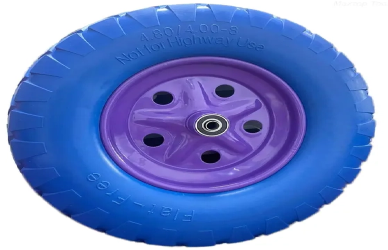
Wheelbarrow wheels are a crucial component that significantly influences the functionality and performance of the wheelbarrow. Whether you are using a wheelbarrow for gardening, construction, or landscaping, the right type of wheel can make all the difference in terms of ease of use, efficiency, and durability. The wheel type affects factors such as load capacity, mobility, and how well the wheelbarrow handles different types of terrain. For example, pneumatic tires provide excellent shock absorption on uneven ground, while solid tires are more durable and puncture-resistant for heavy-duty applications. Understanding the various types of wheelbarrow wheels and their advantages allows users to select the most suitable option based on their specific needs, ensuring smoother operation and greater longevity.
Polyurethane Wheels
Polyurethane wheels are a highly durable and practical option for wheelbarrows, offering several key benefits that make them ideal for specific tasks.
1.Durability and Puncture Resistance
Made from solid polyurethane, these wheels are known for their exceptional durability. Unlike pneumatic tires, which can puncture or deflate, polyurethane wheels remain intact even when exposed to rough conditions. This makes them perfect for environments where sharp objects or debris are common, as they won’t suffer from flats or wear down easily.
2.Ideal for Smooth Surfaces
Polyurethane wheels perform best on smooth surfaces like paved pathways or indoor floors. Their solid construction ensures a steady roll with minimal friction, allowing for easy maneuverability and consistent movement over long distances.
3.Low Maintenance and Long-Term Use
One of the most significant advantages of polyurethane wheels is their low maintenance. With no air to check or replace, these wheels offer hassle-free performance, ideal for long-term use in commercial or residential settings. Their resistance to wear and tear means they can withstand heavy loads and frequent use, providing reliable service over many years.
Pneumatic Tires
Pneumatic tires are air-filled wheels that excel in providing superior comfort and shock absorption, making them an excellent choice for wheelbarrows used in uneven or rough terrain.
1.Shock Absorption and Comfort
The primary advantage of pneumatic tires is their ability to absorb shocks and vibrations, which makes them ideal for handling bumpy or uneven surfaces. Whether you're navigating through gravel, dirt, or rough terrain, these tires help to smooth out the ride, reducing strain on both the user and the wheelbarrow itself. This level of comfort is particularly beneficial when transporting heavy loads across challenging ground.
2.Improved Maneuverability
Pneumatic tires provide enhanced grip and traction, which improves the maneuverability of the wheelbarrow on various surfaces. The air-filled structure allows the tire to conform to the terrain, providing better stability and control, especially on slopes or uneven ground.
3.Adaptability to Different Surfaces
While pneumatic tires are perfect for rugged outdoor environments, they also work well on lawns, construction sites, and other uneven surfaces. Their versatility makes them a go-to choice for users who frequently encounter rough or unpredictable ground conditions.
Solid Rubber Tires
Solid rubber tires are a durable and reliable choice for wheelbarrows, designed to offer excellent load-bearing capacity and long-lasting performance in demanding environments.
1.Exceptional Load-Bearing Capacity
Made from solid rubber, these tires are built to handle heavy loads with ease. They are perfect for applications where substantial weight needs to be transported, such as construction sites, landscaping projects, or gardening tasks involving large materials. The robust structure ensures that the tire remains intact under heavy stress, offering consistent performance even with heavy-duty use.
2.Durability and Longevity
Solid rubber tires are known for their durability. Unlike air-filled tires, they don’t deflate or suffer from punctures, making them ideal for environments where sharp objects or rough terrain are common. They are designed to withstand long-term exposure to harsh conditions, including extreme weather, abrasions, and heavy impacts.
3.Consistent Performance
One of the main advantages of solid rubber tires is their ability to deliver consistent performance across different surfaces. Whether you're navigating uneven ground or smooth paths, these tires provide a stable and steady ride, ensuring minimal disruption to your tasks. Their maintenance-free design further adds to their reliability and convenience.
Solid PU Tires
Solid PU (polyurethane) tires offer a perfect balance between strength, flexibility, and smooth operation, making them a versatile and reliable choice for heavy-duty wheelbarrow applications.
1.Durability and Flexibility
Similar to solid rubber tires, solid PU tires are made from a tough, durable material that can withstand heavy loads and rough conditions. However, polyurethane offers additional flexibility, allowing these tires to better absorb shocks and reduce vibrations during use. This makes them more comfortable to operate than traditional solid rubber tires while maintaining their durability in demanding environments.
2.Smooth Operation
One of the standout features of solid PU tires is their smooth operation. Despite being solid, these tires are designed to roll smoothly over various surfaces, including concrete, gravel, and even grass. The flexibility of polyurethane allows for a more seamless movement, reducing friction and making it easier to maneuver the wheelbarrow.
3.Heavy-Duty and Long-Term Use
Solid PU tires are ideal for long-term use in environments where both strength and comfort are needed. Whether used for landscaping, construction, or agricultural tasks, these tires are built to handle consistent heavy loads without compromising on performance. They offer a longer lifespan compared to other tire types, especially in tough, rough conditions.
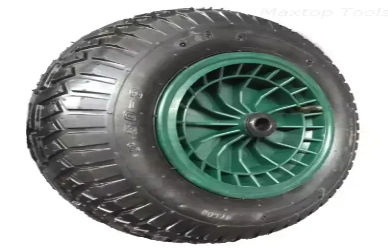
Airless Tires (No-Flat Tires)
Airless tires, also known as no-flat tires, are a revolutionary solution for wheelbarrows that eliminate the risk of flats and provide continuous reliability, even in the toughest conditions.
1.No Risk of Flats
The most significant advantage of airless tires is their ability to operate without air, which completely eliminates the risk of flats. Unlike traditional pneumatic tires, which can be punctured by sharp objects or lose air pressure over time, airless tires offer a maintenance-free solution. This makes them ideal for environments where punctures are common or where tire maintenance would be difficult or time-consuming.
2.Consistent Performance
Airless tires provide consistent performance, as they do not lose air pressure or deflate over time. This ensures that your wheelbarrow operates smoothly and reliably without the need for constant checks or adjustments. They are particularly useful for jobs that require constant use, such as landscaping or construction projects, where reliability is critical.
3.Durability and Strength
Made from durable materials like rubber or polyurethane, airless tires are designed to withstand harsh conditions. They are resistant to punctures, abrasions, and wear, making them long-lasting and dependable. Airless tires are built to handle heavy loads and rough terrain, providing a stable and efficient solution for outdoor and industrial applications.
FAQ (Frequently Asked Questions)
1. What are the advantages of polyurethane wheels over pneumatic tires?
Polyurethane wheels offer several advantages over pneumatic tires. Firstly, they are puncture-resistant, meaning they won’t go flat even when exposed to sharp objects or rough conditions. They are also more durable, providing a longer lifespan and less maintenance since they don't require air. Additionally, polyurethane wheels are excellent for smooth surfaces and offer consistent performance without the risk of deflation, making them ideal for light to moderate-duty tasks.
2. Can solid rubber tires be used for outdoor wheelbarrows?
Yes, solid rubber tires can be used for outdoor wheelbarrows and are often preferred for heavy-duty tasks. These tires are ideal for tough environments, as they are highly durable and can handle rough terrains like gravel, dirt, or uneven ground. While they may not provide the same shock absorption as pneumatic tires, their ability to support heavy loads without requiring maintenance makes them perfect for outdoor use in construction, gardening, or landscaping.
3. Do airless tires perform as well as pneumatic tires?
Airless tires offer many benefits, but they perform differently from pneumatic tires. While pneumatic tires provide superior shock absorption and a smoother ride over rough terrain, airless tires eliminate the risk of flats and offer consistent performance without the need for air pressure. Airless tires can be just as reliable, especially in environments where punctures are a concern, but they may not offer the same level of comfort on uneven ground as pneumatic tires.
4. What is the lifespan of a typical wheelbarrow wheel?
The lifespan of a typical wheelbarrow wheel depends on the type of wheel and the conditions in which it is used. Polyurethane and solid rubber tires tend to last longer than pneumatic tires, as they are less susceptible to punctures and air leaks. On average, a well-maintained wheelbarrow wheel can last anywhere from 2 to 5 years, depending on factors such as load capacity, usage frequency, and exposure to harsh conditions like extreme weather or rough terrain. Regular maintenance and proper care can extend the lifespan of the wheel.
Conclusion
When choosing a wheelbarrow wheel, several factors should be considered to ensure optimal performance. Load capacity is crucial, as the wheel must support the weight without compromising stability. The terrain you'll be working on matters too—pneumatic or airless tires are ideal for rough ground, offering better shock absorption. Maintenance needs vary; solid rubber and polyurethane wheels are low-maintenance, while pneumatic tires require regular air checks. Lastly, durability is key—wheels made from solid rubber or polyurethane last longer, especially in heavy-duty applications. By weighing these factors, you can choose the best wheel for your specific needs.
 注: 建议图片大小150px*50px


