Introduction
When you are deep in a landscaping project or hauling heavy debris across a construction site, the last thing you want to think about is your wheelbarrow tire. Yet, it is the single most critical component determining how much effort you expend. A flat or poorly chosen tire turns a simple task into a back-breaking chore. Whether you are a weekend gardener or a professional contractor, understanding the mechanics of your wheelbarrow tire is the key to efficiency and safety.
This guide explores the diverse world of wheelbarrow mobility. We will break down the engineering behind Solid rubber options, the bounce of pneumatic versions, and why a Heavy duty rating matters for your specific workload. We don't just define these tires; we analyze their real-world performance under pressure. By the end of this expert insight, you will know exactly which tire fits your terrain, load requirements, and maintenance preferences.
Pneumatic Wheelbarrow Tires: The Traditional Air-Filled Choice
For decades, the air-filled or pneumatic wheelbarrow tire has been the industry standard. It mimics the design of a car tire, featuring a rubber casing and an inner tube filled with pressurized air. This design offers a unique "cushioning" effect. When you move over rocky soil or uneven paths, the air compresses, absorbing the shock before it reaches your arms and back.
However, the air-filled wheelbarrow tire comes with a significant trade-off: maintenance. It is susceptible to punctures from thorns, nails, or sharp rocks. If you leave it in a shed over winter, it might lose pressure, requiring a pump before you can start work. Despite this, many pros prefer them for their lightweight feel and superior shock absorption on soft, muddy ground where a harder tire might sink.
Solid Rubber Wheelbarrow Tires: The "Never-Flat" Revolution
If you hate the sight of a bicycle pump, a Solid rubber wheelbarrow tire is likely your best friend. These are manufactured from 100% dense rubber or specialized composites. They are completely puncture-proof. You can roll them over a bed of nails or broken glass without a second thought. This makes them the ultimate choice for demolition sites and rugged farm environments.
The main characteristic of a Solid rubber model is its rigidity. While it eliminates downtime, it doesn't provide the same "bounce" as air. On hard concrete, you might feel more vibration in the handles. However, for many, the trade-off is worth it. You never have to worry about a flat in the middle of a big pour or a long day of hauling. It is a reliable, "set it and forget it" solution for those who prioritize uptime over extreme comfort.
Foam Filled Wheelbarrow Tires: Combining Comfort and Reliability
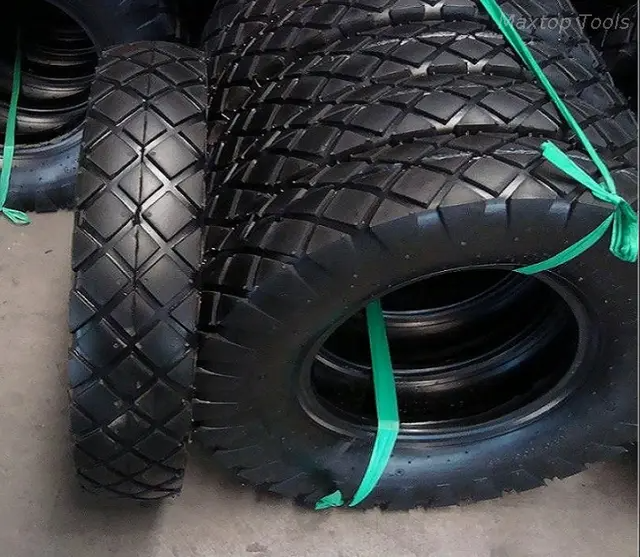
A Foam filled wheelbarrow tire attempts to bridge the gap between air and solid rubber. Manufacturers take a standard tire casing and inject it with a specialized polyurethane foam. Once the foam hardens, it creates a tire that feels like it has air in it but can never go flat. It provides a much smoother ride than Solid rubber while offering 100% protection against punctures.
The Benefits of Polyurethane Fill
No Maintenance: Like solid tires, these require zero air pressure checks.
Better Traction: The foam allows the rubber to "give" slightly, providing a better grip on slick surfaces.
Weather resistant: Unlike some rubber compounds that crack in the sun, high-quality Foam filled tires are often highly Weather resistant, maintaining their integrity in extreme heat or freezing cold.
Performance in the Field
In our testing, we found that Foam filled options are excellent for mid-range loads. They don't flat-spot as easily as older solid tires might if left under a heavy load for a week. They are becoming the go-to for residential users who want the "cushion" of air without the hassle of a pump.
Heavy Duty and High Load Capacity: Choosing for the Job
Not all tires are created equal when it comes to weight. A standard garden wheelbarrow tire might handle 200 lbs, but a professional-grade Heavy duty model can easily support 500 lbs or more. This is where High load capacity becomes a vital metric. If you are hauling wet concrete or large stones, a cheap tire will deform under the weight, making the wheelbarrow nearly impossible to push.
Understanding Ply Ratings
The strength of a wheelbarrow tire is often indicated by its "ply" rating. A 2-ply tire is fine for light mulch, but for gravel and stones, you should look for 4-ply or even 6-ply. These extra layers of reinforcement prevent the tire from bulging and help it maintain its shape under a High load capacity.
Identifying Professional Grade Features
Reinforced Hubs: A Heavy duty tire is useless if the plastic rim cracks. Look for steel hubs with grease fittings.
Sealed Bearings: These keep dirt and water out, ensuring the wheel spins freely even after years of use in the mud.
Thick Tread Patterns: Essential for maintaining grip when the load is heavy and the ground is slippery.
Large Diameter Tires and Terrain Navigation
Terrain dictates the wheel size you need. A Large diameter wheelbarrow tire—typically 16 inches or more—is designed to roll over obstacles rather than hitting them. If you work in a wooded area with roots or on a site with scattered bricks, a Large diameter wheel is non-negotiable.
Advantages of Increased Diameter
A larger wheel changes the center of gravity and the "angle of attack" against bumps. It makes it easier to "climb" over curbs or uneven garden borders. Furthermore, a Large diameter tire usually has a wider footprint. This spreads the weight of the load over a larger surface area, preventing the wheelbarrow from sinking into soft lawns or freshly tilled garden beds.
Stability vs. Maneuverability
While larger wheels handle bumps better, they can make the wheelbarrow feel taller. For users who aren't as tall, this might make the barrow feel slightly more "tippy" when fully loaded. It is a balance of finding the right height for your physical stature and the obstacles in your path.
Weather Resistant Materials and Long-Term Durability
Your wheelbarrow tire likely spends a lot of time outside. Sunlight (UV rays) and moisture are the enemies of rubber. A tire that isn't Weather resistant will eventually develop "dry rot." This manifests as tiny cracks in the sidewall that eventually lead to total tire failure.
Comparing Material Resilience
Investing in a Weather resistant tire means you won't be shopping for a replacement every two seasons. Look for tires specifically labeled with UV inhibitors. These chemical additives in the rubber or foam prevent the sun from breaking down the molecular bonds, keeping the tire flexible and strong for a decade or more.
Which Wheelbarrow Tire is Best for You?
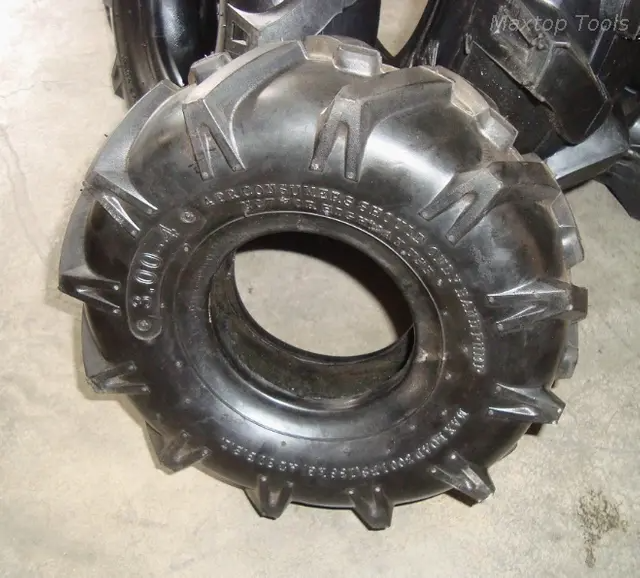
Choosing the right wheelbarrow tire boils down to three factors: your environment, your load, and your patience for maintenance. We have broken these down into specific "user profiles" to help you decide.
The Weekend Gardener
If you only move bags of mulch or light weeds on a manicured lawn, a standard pneumatic tire is fine. It is affordable and easy on your grass. Just keep a small hand pump in the garage.
The Construction Professional
You need a Heavy duty, Solid rubber or Foam filled tire. You cannot afford a flat tire during a timed concrete pour. Look for a High load capacity and a steel rim. The extra cost pays for itself in avoided downtime.
The Farm or Homestead Owner
Given the diverse terrain—from mud to gravel—a Large diameter, Foam filled tire is the "gold standard." It offers the durability of solid rubber with the flotation needed for soft pastures.
Installation and Maintenance Tips for Peak Performance
Even a Heavy duty wheelbarrow tire needs a little love. Proper installation ensures the weight is distributed correctly across the axle.
Step-by-Step Installation
Check the Axle: Before sliding on the new tire, wipe the axle clean of rust and grit.
Grease the Bearings: Use a high-quality marine grease. This prevents the "squeak" and keeps the wheel spinning smoothly.
Tighten Evenly: Ensure the brackets holding the axle are tight but not so tight that they pinch the hub.
Routine Checks
Even for "flat-free" tires, check the hub for play. If the wheel wobbles, your bearings might be wearing out. For pneumatic tires, check the pressure once a month. Running a tire on low pressure damages the sidewalls and makes the barrow much harder to push.
Conclusion
The right wheelbarrow tire is an investment in your own physical health and productivity. By choosing between Solid rubber, Foam filled, or pneumatic based on your specific needs, you eliminate the frustration of equipment failure. Remember to prioritize High load capacity if you do heavy work and look for Weather resistant materials to ensure your tire lasts as long as the wheelbarrow itself.
FAQ
Q: Can I replace an air-filled tire with a solid rubber one on the same rim?A: Usually, no. Most Solid rubber or Foam filled tires come as a complete wheel assembly (tire and rim) because the tire is bonded to the hub. It is much easier to replace the whole wheel.
Q: What is the most common wheelbarrow tire size?A: The most common size is 4.80/4.00-8. This fits the majority of residential and commercial wheelbarrows.
Q: How do I know if my tire is High load capacity?A: Check the sidewall for a "Load Range" or a specific weight rating in pounds. Heavy duty tires will clearly state their maximum capacity.
About Our Factory and Expertise
I have spent years working closely with the manufacturing heart of our company, where we specialize in high-performance mobility solutions. We operate a massive, state-of-the-art factory that focuses on producing professional-grade wheelbarrow tire options for the global B2B market. Our strength lies in our rigorous quality control and our ability to engineer Heavy duty products that withstand the toughest construction environments. We don't just supply tires; we provide reliable partnerships to distributors and tool brands worldwide. Whether it is our High load capacity solid wheels or our Weather resistant polyurethane tires, we ensure that every product leaving our floor is built to exceed industry standards. We understand the demands of the professional user, and we have the industrial capacity to meet large-scale orders without ever compromising on the "never-flat" promise.
 注: 建议图片大小150px*50px


