Introduction
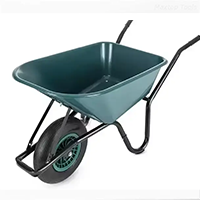
Choosing the right wheelbarrow feels like a simple task until you stand in the garden center staring at two different designs. One has a single tire centered under the tray; the other boasts a sturdy pair. This choice isn't just about looks. It dictates how your back will feel after a Saturday of landscaping and how easily you can navigate a narrow garden path.
The debate of "One Wheel Or Two?" centers on a trade-off between maneuverability and stability. A Heavy duty steel model with a single wheel offers agility for tight turns. Meanwhile, a Two wheel residential version provides a level base that refuses to tip over. In this guide, we break down the expert insights you need to match the tool to your terrain. We will look at weight distribution, tire types like the Flat free tire, and tray materials ranging from light plastic tray options to rugged steel. Let’s find out which configuration belongs in your shed.
The Single Wheel Advantage: Agility and Precision
The classic wheelbarrow design features a single wheel at the front. It has remained a staple on construction sites and farms for centuries. Why? Because it acts as a pivot point. When you lift the handles, you have complete control over the direction of the load.
A single-wheel wheelbarrow excels in tight spaces. If you need to navigate narrow wooden planks, winding garden trails, or cluttered workspaces, this is your best bet. Because it only has one point of contact with the ground, you can "weave" through obstacles. However, this agility comes with a physical price. You are the second and third wheels. You must provide the balance. If the load shifts in a Heavy duty steel tub, your arms must compensate immediately to prevent a spill.
Why Professionals Still Prefer the Single Wheel
Experienced landscapers often stick with the one-wheel variety because of the "dumping" mechanics. It is much easier to pivot a single wheel to the side to drop a load of mulch exactly where you want it. For tasks requiring a High weight capacity, the single wheel allows for more aggressive maneuvering on uneven dirt, provided the operator has the upper body strength to keep it upright.
Two-Wheel Stability: The Residential Game Changer
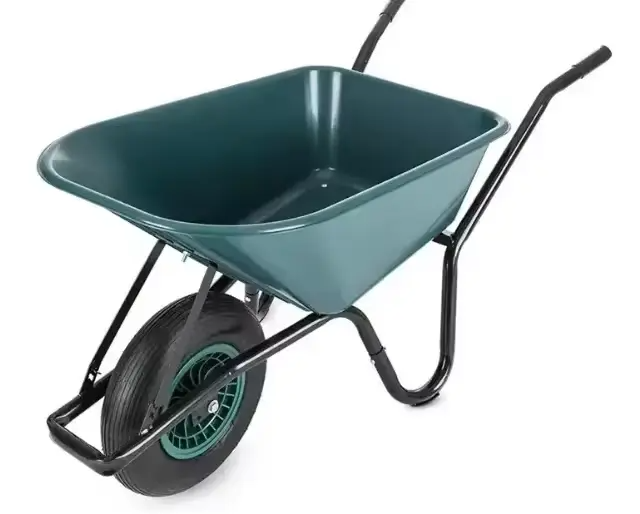
The Two wheel residential model, often called a garden cart or a dual-wheel wheelbarrow, focuses on balance above all else. By adding a second tire, the manufacturer creates a tripod of stability between the wheels and the operator.
This design is perfect for those who worry about tipping. If you are hauling a light plastic tray filled with loose leaves or uneven firewood, the dual wheels keep the tray level. You don't have to fight the load to keep it from flopping over to the left or right. It stays upright even when you let go of the handles. This makes it an ideal choice for seniors or anyone who wants to reduce the strain on their core and wrists.
Limitations of the Dual-Wheel Setup
While a Dual wheel garden helper is stable, it isn't a mountain climber. On side-slopes or very bumpy terrain, one wheel might lift off the ground, causing the whole unit to wobble. It also requires a wider path. You cannot easily push a two-wheeled version across a narrow 2x4 board or through a skinny gate. It trades the "sports car" handling of the single wheel for the "SUV" stability of a wider base.
Comparing Tray Materials: Steel vs. Plastic
The frame and wheel count matter, but the tray holds the payload. Your choice of material influences the total weight and the durability of the wheelbarrow.
Making the Choice for Your Back
If you choose a High weight capacity steel model, remember that the tray itself adds significant weight before you even put a single stone in it. If you are doing light gardening, a light plastic tray on a Two wheel residential frame is a dream to use. It’s easy to wash out and won't corrode if you leave damp fertilizer inside it overnight. However, for heavy construction, the poly tray might crack under the impact of falling bricks.
Tire Tech: Why a Flat Free Tire Changes Everything
Nothing ruins a workday like a flat tire. Most standard wheelbarrow models come with pneumatic (air-filled) tires. These provide a "cushion" that makes it easier to bounce over rocks and curbs. But they are vulnerable to thorns, nails, and age.
The Flat free tire is the modern solution. These are made of solid polyurethane foam. They feel like air-filled tires but can never go flat.
Reliability: You can leave it in the shed for three years, and it will be ready to roll instantly.
Performance: They handle a High weight capacity without bulging or compressing.
Value: While they cost more upfront, they save money on inner tubes and patches over the tool's lifespan.
Whether you go for a single or Dual wheel garden setup, upgrading to a Flat free tire is arguably the best investment you can make for your equipment.
Weight Distribution and Ergonomics
The physics of a wheelbarrow involve leverage. When you pick up the handles, you want the wheel to carry as much of the weight as possible.
The Physics of the Load
In a single-wheel Heavy duty steel unit, the wheel is often tucked further back under the tray. This shifts the weight off your arms and onto the axle. In many Two wheel residential designs, the wheels are further forward. This makes the unit more stable but can actually make the handles feel heavier during the lift.
Handle Length Matters
Longer handles provide more leverage. They make lifting a High weight capacity load feel lighter. However, they also make the wheelbarrow longer and harder to store. Look for handles with comfortable grips; they dampen the vibrations when you are rolling over gravel or rough concrete.
Selecting Based on Your Specific Tasks
To solve the "One or Two" dilemma, you must audit your property. We have categorized the most common tasks to help you decide.
Scenario A: The Landscaping Professional
If you spend your days moving heavy gravel, wet concrete, or large boulders, go for a single-wheel Heavy duty steel model. You need the ability to dump precisely and move through narrow construction gaps. You likely have the strength to balance the load, and the steel will survive the abuse of heavy debris.
Scenario B: The Weekend Gardener
If your chores involve moving bags of mulch, weeding, and hauling the occasional bag of soil, a Two wheel residential unit is superior. Pair it with a light plastic tray. This combo is light enough for anyone to use and stable enough that it won't tip over when you're filling it with a shovel.
Scenario C: The Rough Terrain Specialist
If your property is hilly or has many tree roots, the single-wheel wheelbarrow with a large, knobby tire is better. It can navigate between roots where a dual-wheel version would get hung up or bounce violently.
Maintenance and Longevity Secrets
Regardless of the wheel count, a wheelbarrow is an investment. It needs basic care to last a decade or more.
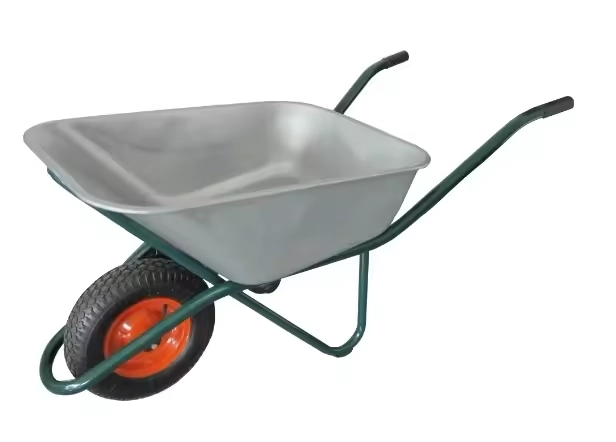
Wash after use: Especially if you use a Heavy duty steel model. Concrete and fertilizers are corrosive. A quick spray with the hose prevents rust.
Lubricate the axle: A squeaky wheel isn't just annoying; it’s a sign of friction wearing down the metal. A squirt of grease once a season keeps it rolling smooth.
Store it upright: If you have a light plastic tray, store it upside down or in a shed. This prevents water from pooling (which breeds mosquitoes) and protects the poly from UV damage.
Check the bolts: The vibrations from a High weight capacity load can loosen the nuts holding the tray to the frame. Tighten them once a year to keep the structure rigid.
Conclusion
The "Best" wheelbarrow depends entirely on the operator and the environment.
Choose one wheel if you value agility, need to dump precisely, or work in cramped, narrow spaces. It is the athlete of the garden tools.
Choose two wheels if you prioritize stability, have a flatter yard, or want to avoid the physical strain of balancing a heavy load. It is the steady workhorse for the average home.
Pair either choice with a Flat free tire and the appropriate tray material, and you will have a tool that makes your outdoor labor significantly easier.
FAQ
Q: Can I convert my single-wheel wheelbarrow to a dual-wheel?A: Some brands sell conversion kits, but it usually changes the balance of the tool. It is often better to buy a dedicated Dual wheel garden model designed for that geometry.
Q: Is a plastic tray strong enough for rocks?A: A high-quality light plastic tray can handle smooth river rocks, but sharp, heavy jagged rocks might dent or crack it over time. Use Heavy duty steel for demolition or masonry work.
Q: How much weight can a standard two-wheel residential wheelbarrow hold?A: Most are rated for a High weight capacity of 200 to 300 pounds. Always check the manufacturer's label, as the axle is usually the first part to fail if overloaded.
About Our Manufacturing Strength
As a dedicated leader in the hardware tool industry, we take pride in our massive manufacturing capabilities. We operate a world-class factory that specializes in producing high-quality wheelbarrow products for the global B2B market. We understand the rigorous demands of professional contractors and the specific needs of residential homeowners. Our facility utilizes advanced production lines to craft everything from Heavy duty steel frames to impact-resistant light plastic tray components.
We don't just assemble parts; we engineer solutions. By focusing on durability and ergonomics, we provide our partners with tools that boast a High weight capacity and long-lasting performance. Whether you need a fleet of Two wheel residential units for a retail chain or specialized models with a Flat free tire for industrial use, our factory has the strength and expertise to deliver. We are committed to supporting our B2B clients with reliable supply chains, rigorous quality control, and competitive pricing that only a direct manufacturer can offer.
 注: 建议图片大小150px*50px


